
How Draper Residents Are Found
A useful search has a question, a date, and a place. “Who owns this parcel?” points to the Salt Lake County Assessor and Recorder. “Was this person registered at an address?” points to the Utah voter system, within its public-field rules. “Who lived here in an earlier era?” calls for directories, census records, newspapers, tax cards, and deeds. Most of Draper falls in Salt Lake County, but Traverse Ridge creates a real county check. Confirm the parcel county in the county GIS or the Utah statewide parcel viewer before you choose a recorder.
The strongest result is not always a name. A parcel number may be the stable bridge between the Assessor, GIS, Recorder, and tax material. A court case number can separate two people with the same name. A directory entry can show a listed occupant at the edition’s compilation date, not a current household. Use those limits as part of the method.
- Write the exact name, address, date, street direction, and city label you have.
- Check the Salt Lake County parcel record and capture the parcel ID, situs address, and mailing address.
- Use the Recorder index for a deed or other recorded document, then note the parties and legal description.
- Use Utah voter, court, vital, license, or business records only for the question they can answer.
- For older clues, search Draper, Draperville, Willow Creek, and the relevant precinct label in directories, newspapers, and archives.
Draper Resident Records Offices
Draper City, Salt Lake County, Utah state offices, and the courts keep different pieces of the public record. The Draper City public-records page routes City Council material, legal notices, elections, City Code, cemetery matters, and city-record requests to the City Recorder. City Hall is at 1020 E Pioneer Road, Draper, Utah 84020; the City Recorder line is 801-576-6502 and normal City Hall hours are Monday through Friday, 8 a.m. to 5 p.m.
Salt Lake County Recorder
2001 S State Street, Suite N1-600
Salt Lake City, UT 84190
385-468-8145
Public Search and Data Services
Salt Lake County Assessor
2001 S State Street
Salt Lake City, UT 84114-7421
385-468-8000
Property Valuation Search
Utah Voter Records
State registration and county election routes
Salt Lake County Elections: 801-462-3427
Utah Vote status portal
The Recorder handles deeds, liens, plats, mining records, and related instruments. The Assessor handles owner, situs, mailing, value, exemption, and building fields. The Salt Lake County Clerk handles county election and marriage duties. A generic request sent to the wrong office can delay the search, so name the record series and event when contacting staff.
Start With Draper’s County Line
Traverse Ridge is more than a scenic edge. It is a records boundary between Salt Lake and Utah counties. The City’s official maps and hazard material place planned communities on both sides, and the statewide parcel viewer lets a searcher choose a county before finding an address. A mailing city that says Draper does not by itself decide which county Recorder holds a deed.
Use the Utah parcel viewer or the Salt Lake County GIS map to check the parcel’s county, address, serial number, subdivision, and tax district. If the parcel is on the Utah County side, use Utah County land records for the land record. Keep the county, source date, and city-limit result in your notes. That small step prevents a blank search from being mistaken for a missing person or missing deed.
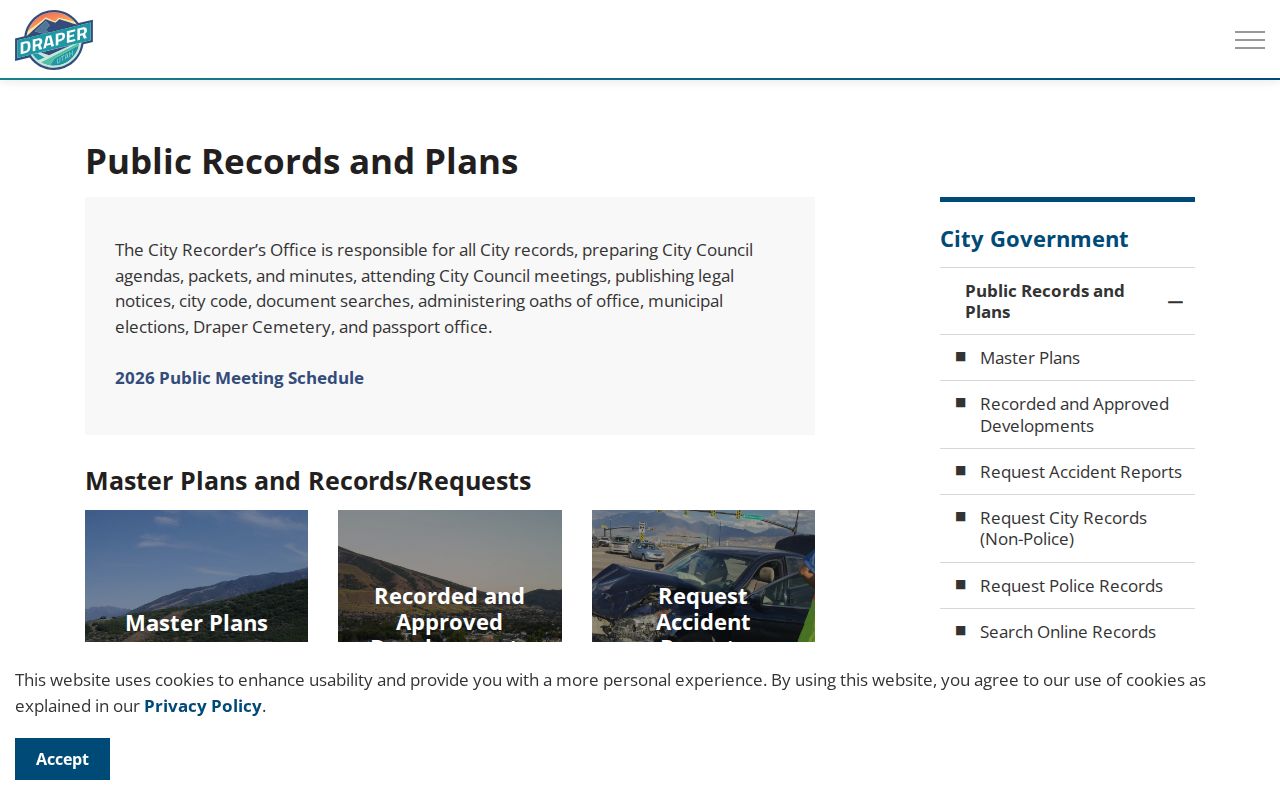
The Draper City public-records page is the municipal route for plans and city-held records.
The Assessor’s Mailing-Address Clue
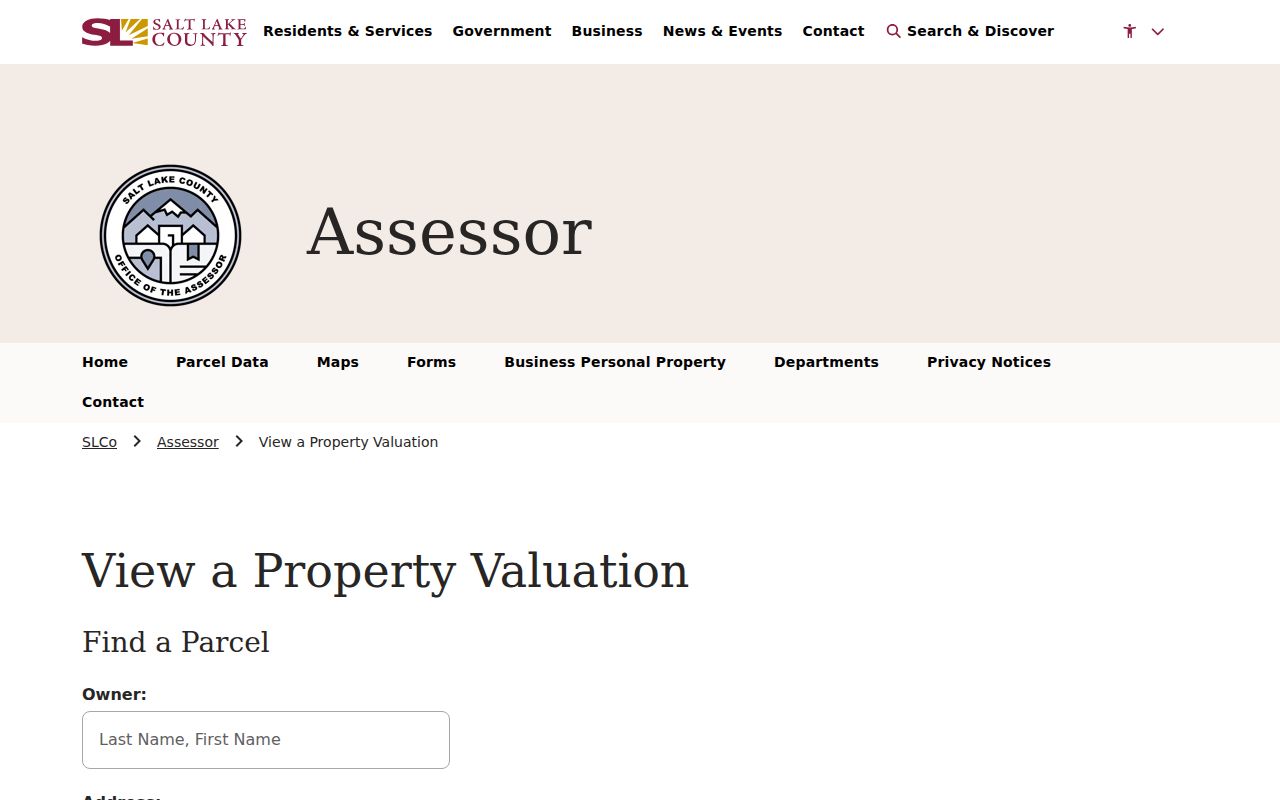
The Salt Lake County Assessor’s current search accepts Owner, Address, and Parcel Number. Address searches require choosing a returned autocomplete address, and parcel searches use the displayed parcel format. The legacy search adds frontage number, direction, street name or number, type or direction, and partial owner or parcel values. An owner name needs at least three letters on the legacy screen. A first seven-digit parcel prefix can search a block, but the full parcel is safer.
| Assessor field | What it does |
|---|---|
| Owner | Searches the indexed owner name, in Last Name, First Name form. |
| Address | Uses a selected situs address from suggestions. |
| Parcel Number | Uses the parcel bridge to GIS and Recorder material. |
| Parcel card | May show situs, mailing, legal description, value, district, exemption, and building fields. |
A mailing address is a correspondence location, not proof that the owner lives at the parcel. Trusts, estates, businesses, multiple parcels, and homestead flags need care. The Assessor’s own property record is the right place to test the clue; a secondary list should not be treated as a substitute.
The Salt Lake County property valuation page shows the owner, address, and parcel search paths for a Draper record.
From Parcel to Recorded Deed
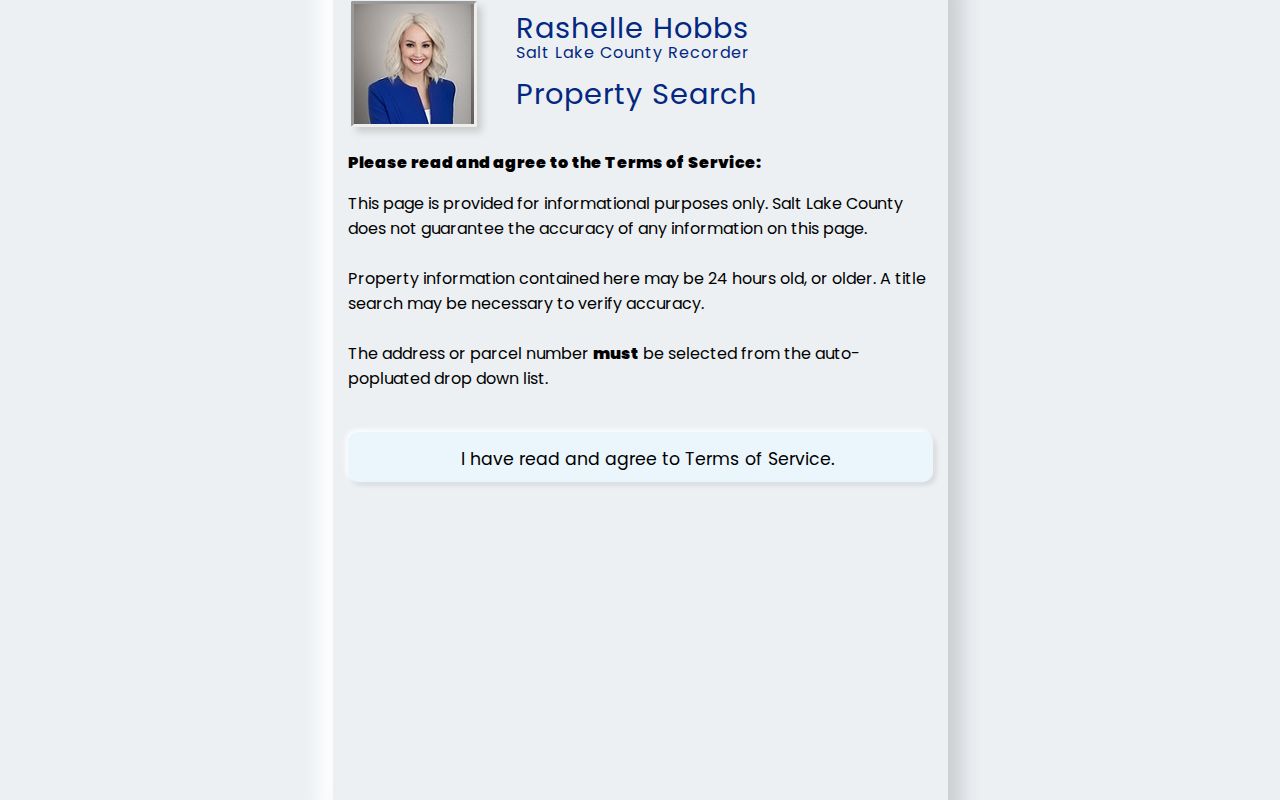
The Recorder’s free Public Search requires acceptance of its terms and a selected address or parcel from an autocomplete result. It gives a quick recorded-document list. Data Services advertises owner of record, parcel-number history, legal descriptions, tract index, chain of title, subdivision and plat maps. A temporary login costs $5 for 24 hours, while packages and recorded images have separate access and fee rules. Recorded images are typically available by the next working day on the detailed service page, but current access terms can change.
| Index field | Use in a resident record trail |
|---|---|
| Grantor and grantee | Shows the parties transferring or receiving an interest. |
| Instrument type and date | Separates a deed from a lien, release, plat, or other filing. |
| Entry number and book/page | Preserves the source key for a later copy request. |
| Legal description | Connects the record when a street address changes. |
A 2006 county audit reported mainframe index coverage from 1981 forward and handwritten ledgers before 1981. The current public search does not state its cutoff, so ask the Recorder which Draper books are searchable. County Archives guides add a fallback: tax assessment rolls run from 1853 to 1949, and tax ledgers run from 1950 to 2010.
The Recorder Public Search is the official starting point for a Draper document trail.
Check Utah’s Public Voter Fields
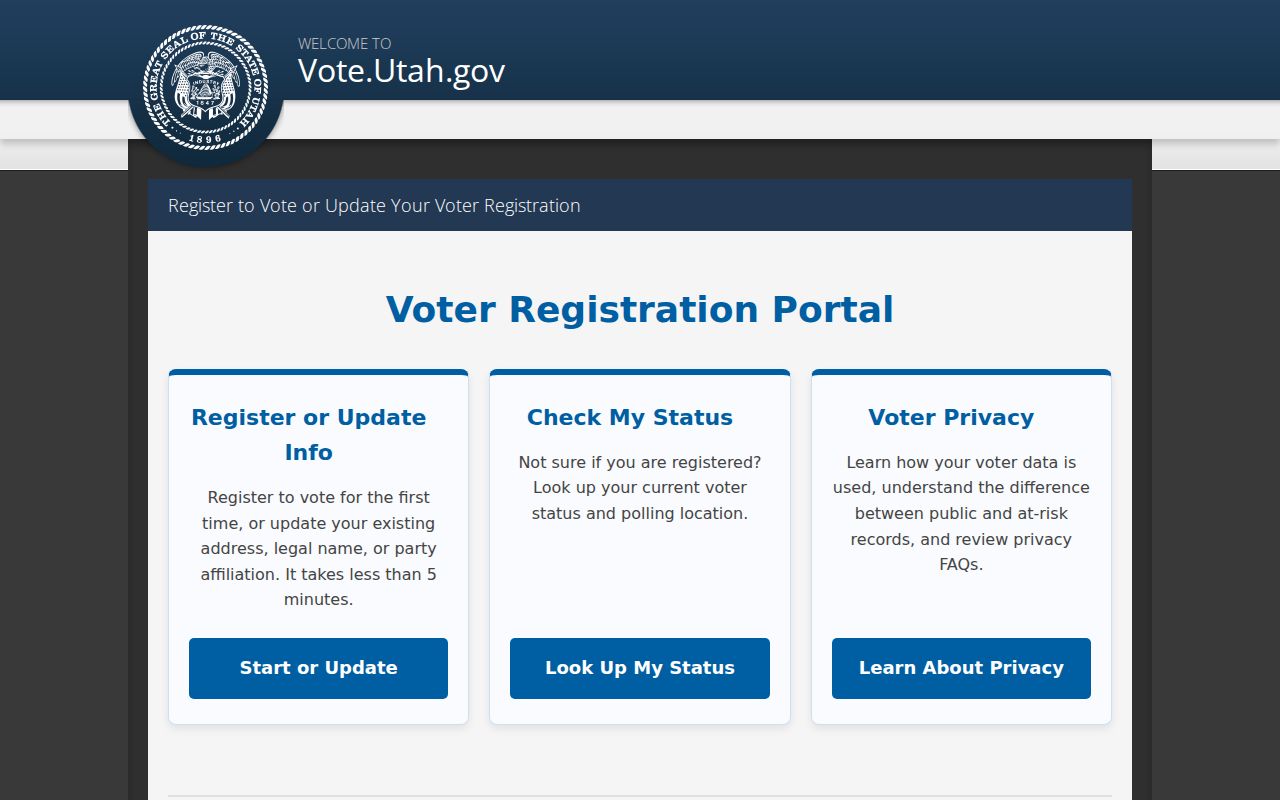
The Utah Vote portal offers registration, update, and status routes, but the inspected page does not expose a public name-search result screen. Utah Code 63G-2-201 makes a defined subset of voter information public: name, physical and mailing address, year of birth, party affiliation, and vote history showing whether a person voted, not ballot choices. Social Security numbers, ID numbers, full birth date, phone, email, and signature are withheld. Protected and at-risk voters may be omitted or shielded.
For a broader official file, Utah describes a statewide database request and county election lists. The published material says a statewide database costs $1,050 and an election list costs $35, with timing and snapshot rules that must be checked at order time. Do not treat a paid file as a casual street browse. Keep only the fields needed for a lawful question, and never publish a block list.
The Utah Vote registration and status page is the state entry point for a Draper voter-record question.
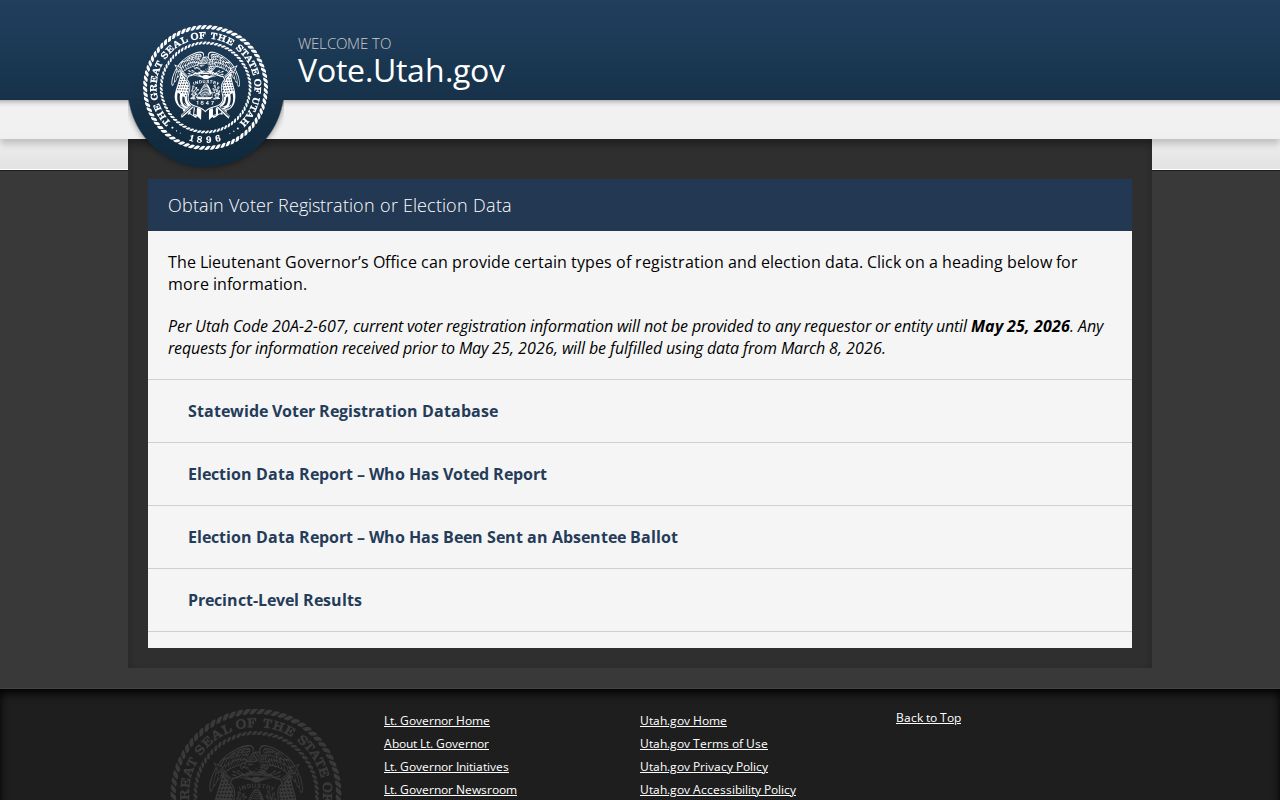
The Utah voter data page describes the separate official file request and its delivery rules.
Read a Draper Court Result Carefully
Utah Xchange serves Draper Justice Court and the Utah Third District Court. Search controls include jurisdiction, search type, case number, last name or company, first name, case type, scope, birth date, citation number, and a date-range panel. Results can show county, court location, case type, number, filing date, party link, party code, case history, documents, and disposition when available. The result cap is 500, and help material states that document access can cost $1.
Justice Court coverage varies by start date. Most district information is in CORIS by the end of 1998, and public electronic district documents date from July 1, 2010. Private, sealed, juvenile, child-welfare, termination-of-parental-rights, and expunged matters do not appear. Public courthouse terminals and the Utah State Law Library are fallback access points. Federal matters use PACER and a separate account route.
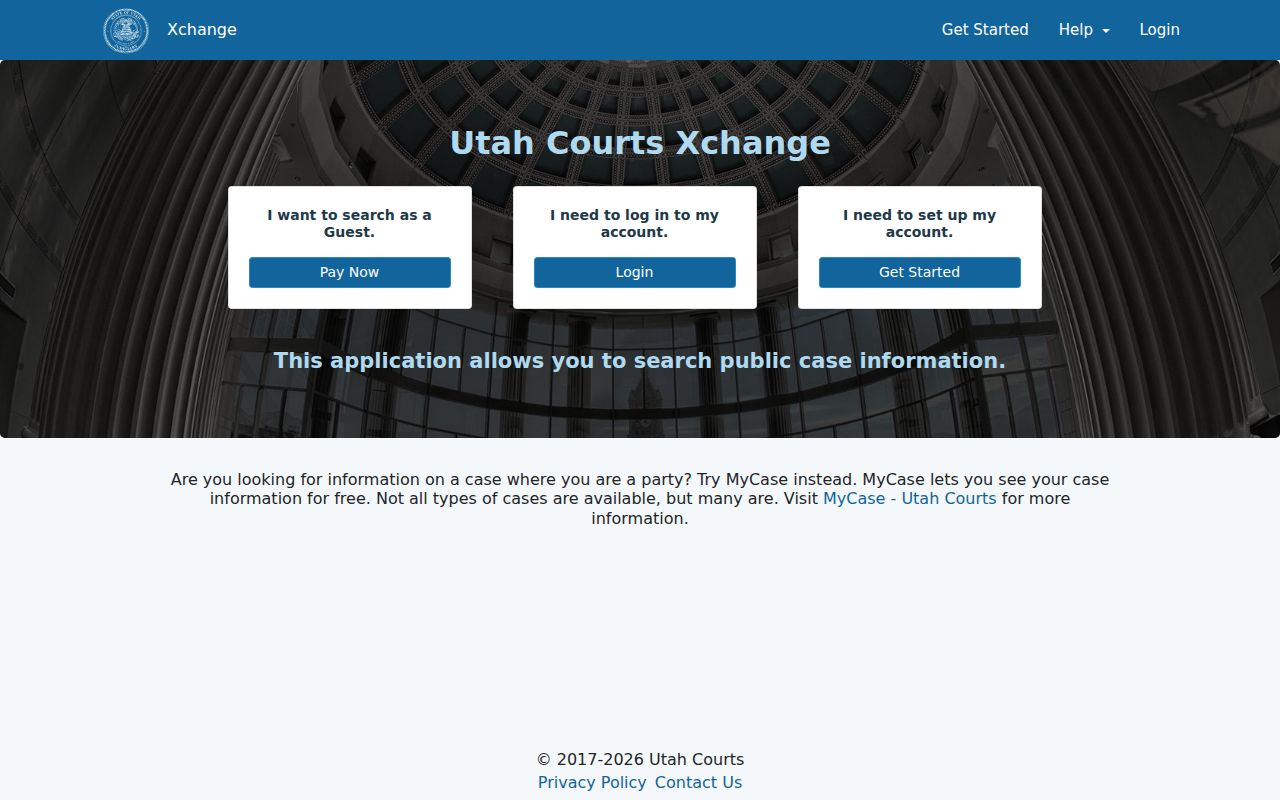
The Utah Xchange entry page shows the guest search, login, and payment route behind a Draper court-name search.
Birth, Death, Marriage, and Divorce Doors
Vital records are split by event and eligibility. Utah birth certificates become public after 100 years, death certificates after 50 years, and other vital records, including marriage and divorce records subject to the statute, generally after 75 years under Utah Code 26B-8-125. Current copies require the relationship, identification, or legal-need showing listed by the custodian. The Utah Office of Vital Records and local health departments handle eligible birth and death copies; the county clerk holds an original marriage license where the application was made; the court that granted a divorce holds the decree.
Salt Lake County marriage records route through the Clerk at 2001 S State Street, Suite S2-200, with 385-468-7300 and Monday through Friday, 8 a.m. to 5 p.m. The inspected page lists a $5 certified copy plus $3 shipping, but fees should be confirmed. Utah vital offices offer limited marriage and divorce abstracts for 1978 to 2010. For older names, the State Archives indexes births from 1905 to 1911 and deaths from 1905 to 1968.
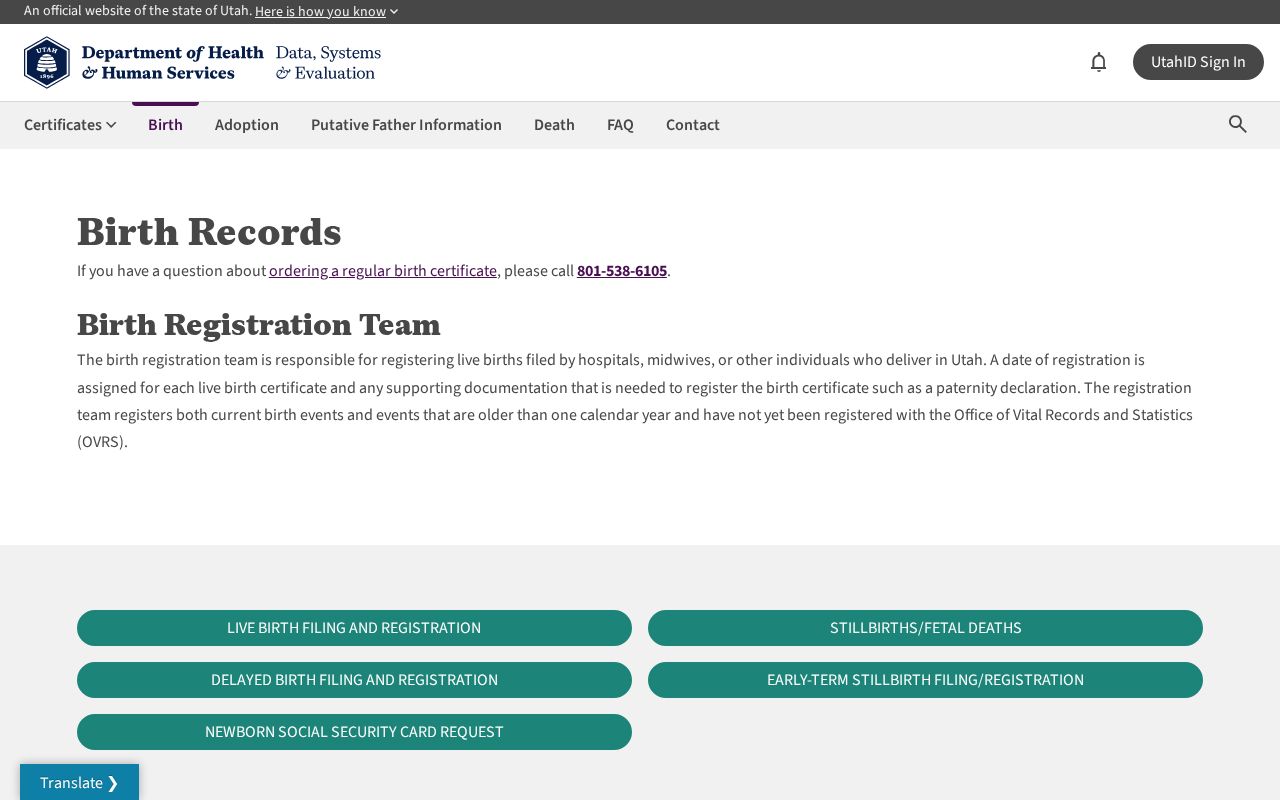
The Utah Vital Records page separates public-history access from restricted current certificates.
Historic Draper Names in Print
The University of Utah’s Utah City Directories collection contains 232 digitized items from several publishers. Named suburban titles include Draper in 1965, 1970 to 1971, 1971, 1974, 1977 to 1978, 1979, and 1980, with related territory runs from 1957 to 1959 and 1962 to 1964. A title that says suburban territory is a lead, not proof that every Draper street appears. Inspect the scan and note the printed section.
The Salt Lake County Library genealogy page links Utah Digital Newspapers, with more than one million historic pages, and on-site Ancestry Library access. The Draper Historical Society Research Library and Museum at 1054 Pioneer Road holds local books, photographs, artifacts, and personal stories. Its listed hours are Monday and Wednesday, 9 a.m. to 4 p.m., by scheduled visit, at 801-495-3476. Search both “Draper” and “Draperville,” then test Willow Creek and old precinct labels.
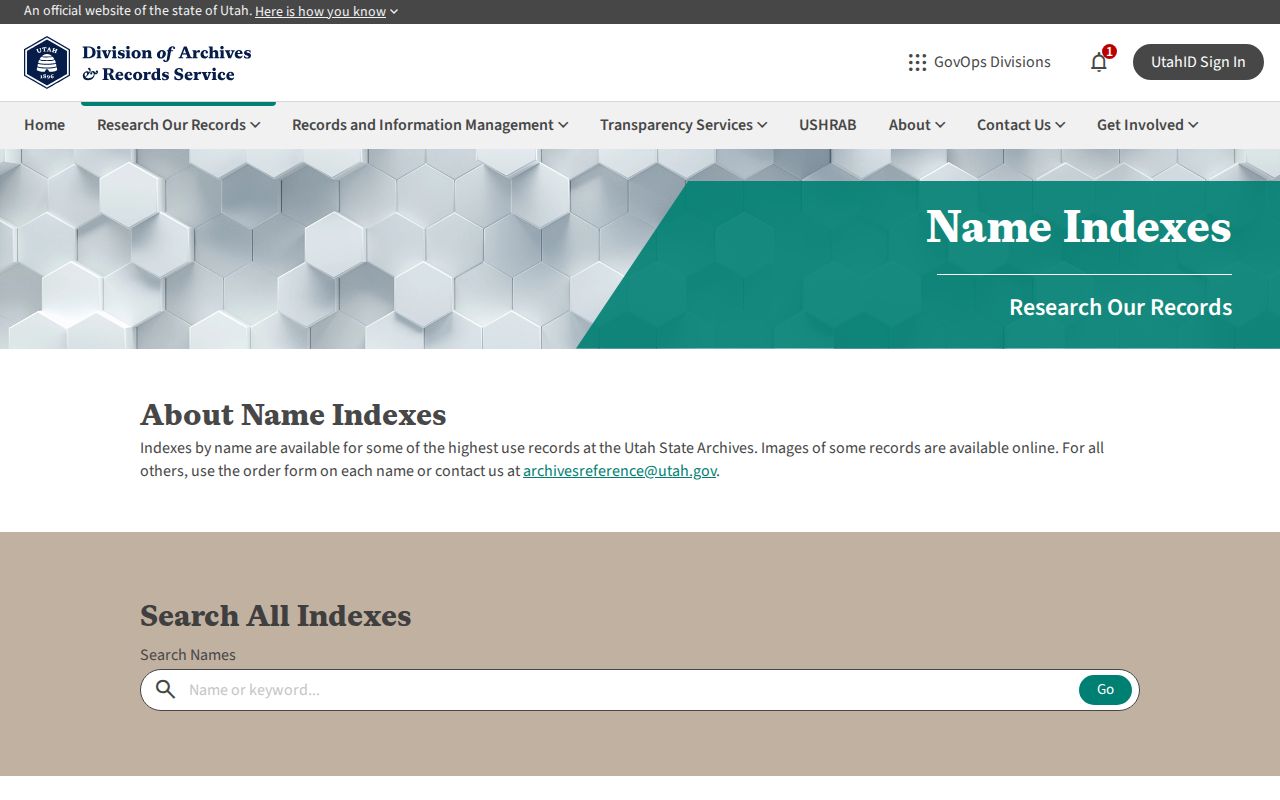
The Utah State Archives indexes provide another route for older Draper names and dates.
When the Online Index Stops
Utah GRAMA, the Government Records Access and Management Act in Title 63G Chapter 2, provides a written route for an existing record not found online. A request should identify the requester and contact route, name the custodian, describe the record, and give a date range, person, place, or parcel. The standard response deadline is 10 business days. Submit through the Utah Open Records Portal, email, fax, mail, or in person. The Salt Lake County GRAMA route uses a county request portal and department routing.
Ask for a record series rather than a broad answer. For an old property question, name the Recorder index, abstract card, tax ledger, serial number, legal description, or plat. Agencies answer requests for existing records; they do not have to create a new resident list. Inspection may be less costly than copies, and actual search or preparation fees can apply. A denial can be appealed through the agency and the state records process.
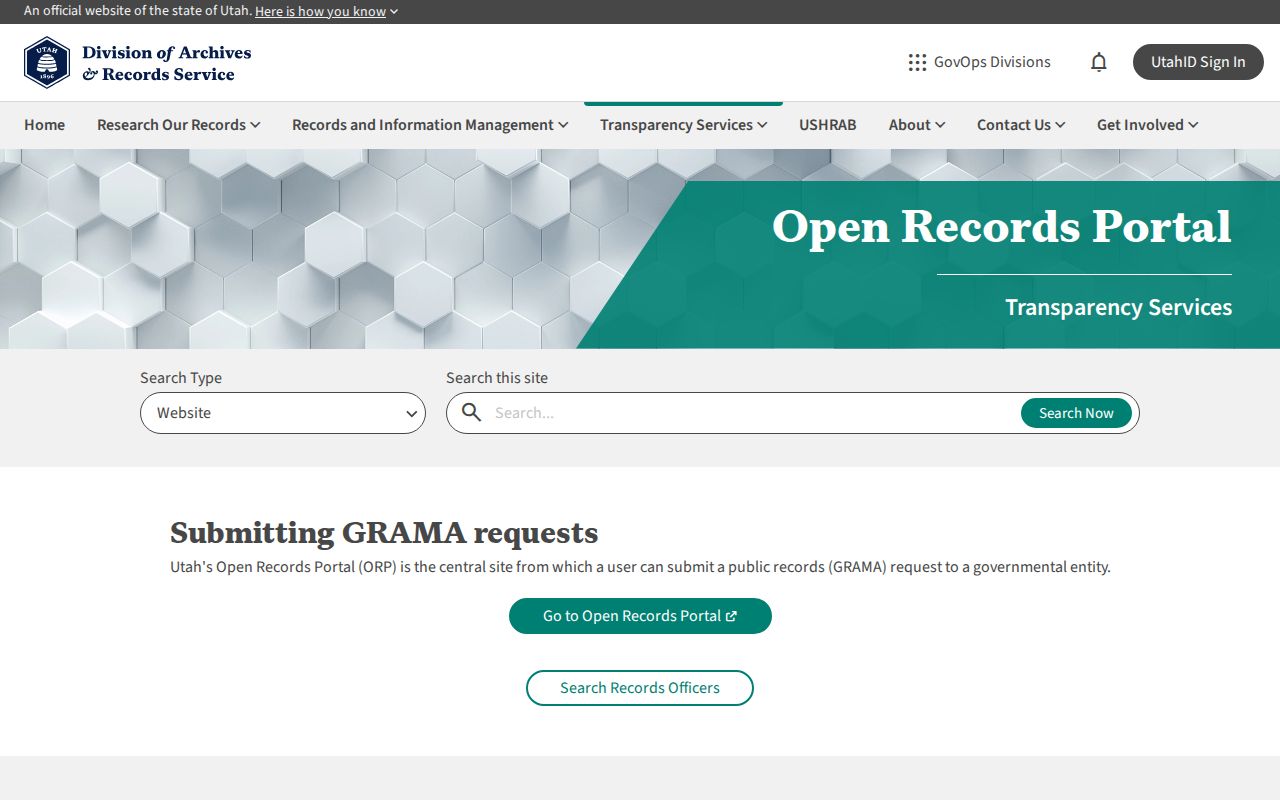
The Utah Open Records Portal shows the central request route for a record held by a state custodian.
Draper Cemetery’s Sand Hill Trail
Draper Cemetery adds a human and geographic link to older records. The burial ground began around 1850 at Sand Hill, and remains moved in 1870 to the present site near east Fort Street. The City provides an interactive ArcGIS map and says a printed map is available in the cemetery building. Appointments are required for plot research, ownership transfers, and corrections; no plots are currently for sale.
For a deceased former resident, pair a newspaper notice or death index with cemetery research, then compare the name, dates, relatives, and plot information. The City page does not expose a confirmed public interment-name search, so contact staff rather than assuming a map includes every field. A cemetery result supports burial or plot research. It does not prove where a person lived at the end of life.
Utah Safe at Home Protections
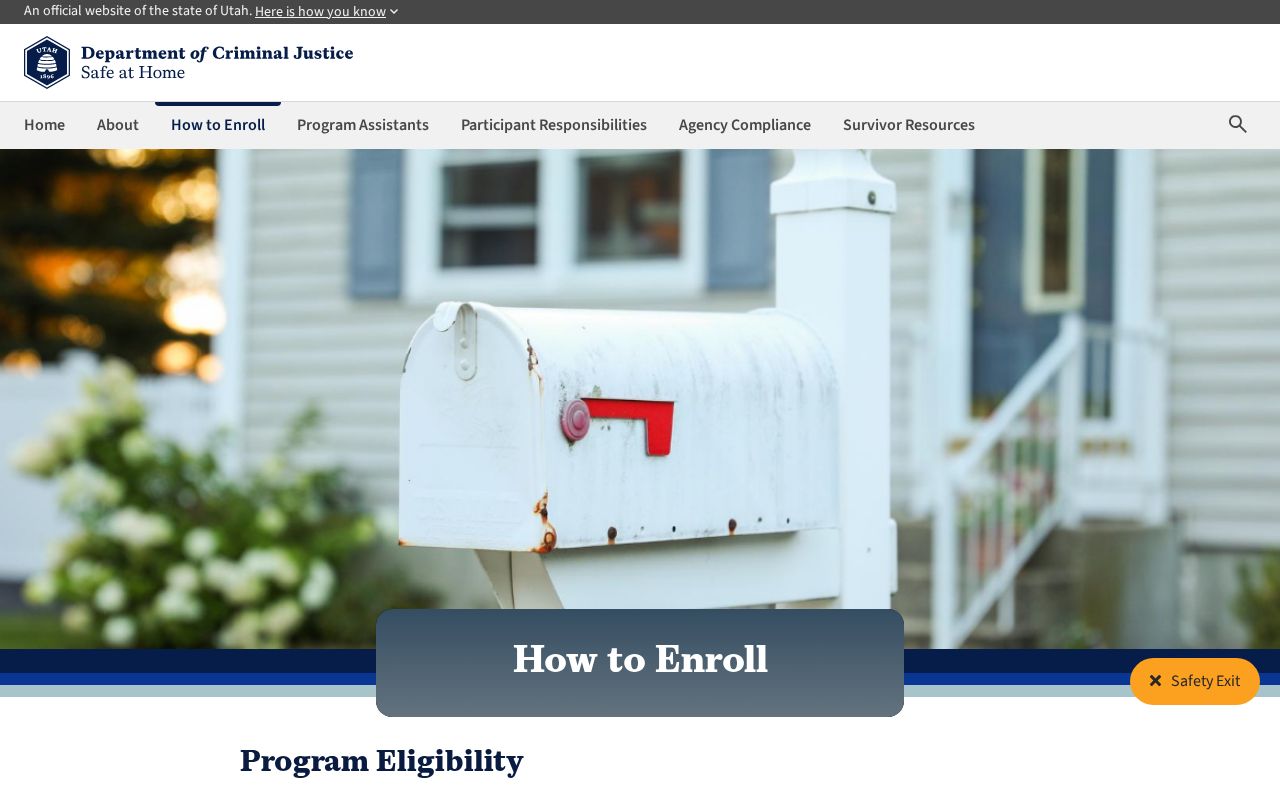
Some Draper residents participate in Utah’s Safe at Home address-confidentiality program. The official Safe at Home enrollment page explains how an eligible participant can use a substitute address and keep an actual address out of ordinary public records. A missing address should not be treated as a failed search or an invitation to rebuild the protected location from other clues.
When a record search touches a protected person, stop at the public fields and use the program’s official contact route for questions. Do not copy, publish, or combine indirect details to defeat confidentiality. This safeguard belongs in any Draper resident search that involves a person facing a documented safety risk.
The Utah Safe at Home page provides the official enrollment route for address confidentiality.
Official Rolls and Private Compilations
Official records differ in purpose. A county parcel card records property context. A Recorder index records instruments and parties. A voter source exposes a defined public subset. A city directory lists people and addresses at the time of compilation. A private compilation may merge public records with marketing data, carry old addresses, and use its own matching and removal process. It can help suggest a spelling, but it should not replace the source custodian.
| Source type | Best use | Key caution |
|---|---|---|
| Assessor and GIS | Owner, parcel, situs, mailing, map | Owner or mailing address is not occupancy proof. |
| Recorder | Deeds, liens, plats, title trail | Party to a document is not every occupant. |
| Directory or newspaper | Historical name, address, family clue | Compilation date and editorial gaps matter. |
| Private compilation | Possible lead or spelling variant | Accuracy, cost, and opt-out terms vary. |
Lawful use. Draper records are for personal, lawful research and civic understanding. Do not use a name, address, voter field, or court result to stalk, harass, intimidate, or harm another person.
Current Draper Resident Directories
There is no single current list of every person in Draper. The useful sources answer different questions and should remain separate in your notes. The table below is a directory map, not a claim that each source lists a household.
| Source | What it lists | Keeper | Access |
|---|---|---|---|
| Parcel card | Owner, situs, mailing, value, parcel | Salt Lake Assessor | Free web search |
| Recorded index | Deed, lien, plat parties and dates | Salt Lake Recorder | Free list, paid options |
| Voter fields | Public registration and participation fields | Utah and county election offices | Status or official request |
| City contact list | City staff and office routing | Draper City | Free online |
| Business and license records | Entity officers, licensees, status | Utah and Draper offices | Portal or data request |
Use the right noun in your conclusion: owner, registered voter, court party, licensee, listed occupant, claimant, or burial record. That precision keeps a Draper residents directory useful without turning a partial record into a claim about someone’s present life.
Historical Draper Resident Directories
Old city directories are strongest when paired with another source. In a Polk suburban volume, search the alphabetical name section, then the street or geographic section. Record the printed year, page, address, occupation or business line when present, spouse or relative notation, and the directory’s own abbreviation key. The 1977 to 1978 item is a two-year publication, so it is not an exact census-date observation.
Draper’s historical labels matter. Searchers may find Willow Creek, Draperville, or Draper precinct rather than the modern city label. The City’s histories, Salt Lake County tax cards, Utah Digital Newspapers, cemetery research, and the Utah State Archives can fill gaps where a suburban directory is silent. The historical shelf belongs in a deliberate trail: directory clue, newspaper or obituary, census household, deed or tax card, then an eligible vital-record copy.