
Sources for Draper Previous Residents
Each source answers a different historical question. The Recorder shows recorded title events. Archives tax material can retain owner and property details before a modern online index. A directory can list an occupant at its compilation date. The census supplies household relationships. Newspapers, probate, and cemetery records can explain a move or death. Treat the table as an era map, not a promise that every year is online.
| Source | Years it covers | Where held | What it shows |
|---|---|---|---|
| Salt Lake Recorder index | 1981 forward reported by 2006 audit; current expansion unknown | Recorder Data Services and older ledgers | Recorded documents, parties, legal descriptions |
| Tax assessment rolls | 1853-1949 | Salt Lake County Archives | Owner/address, legal description, values, taxes |
| Tax ledgers | 1950-2010 | Salt Lake County Archives | Serial or SIDWELL, owner address, values, changes |
| Polk suburban directories | Named Draper-including titles from 1965-1980; other runs need scan check | University of Utah digital collection | Listed occupant, address, business, occupation when printed |
| Federal census | 1850-1950 under 72-year release rule | Census, NARA, library databases | Household members and relationships at enumeration |
| Sanborn maps | Salt Lake City volumes 1884-1950; Draper sheets unconfirmed | Library of Congress | Building and street context, not occupants |
The dates for a source describe the identified run, not a complete Draper address series. Record the exact item and page.
Freeze the Modern Parcel Identity
Begin with the current address exactly as written, including direction and street type. Use the Utah statewide parcel viewer or Salt Lake County GIS to confirm county, parcel ID, subdivision, lot, block, and legal description. A parcel near Traverse Ridge may require Utah County land records rather than Salt Lake County records, even when its mailing city says Draper.
Open the Salt Lake County Assessor and save the owner, situs address, owner mailing address, parcel number, legal description, value, district, exemption, and building fields that are displayed. The mailing address is not the property address. This snapshot gives the old search a stable key when the street label changes.
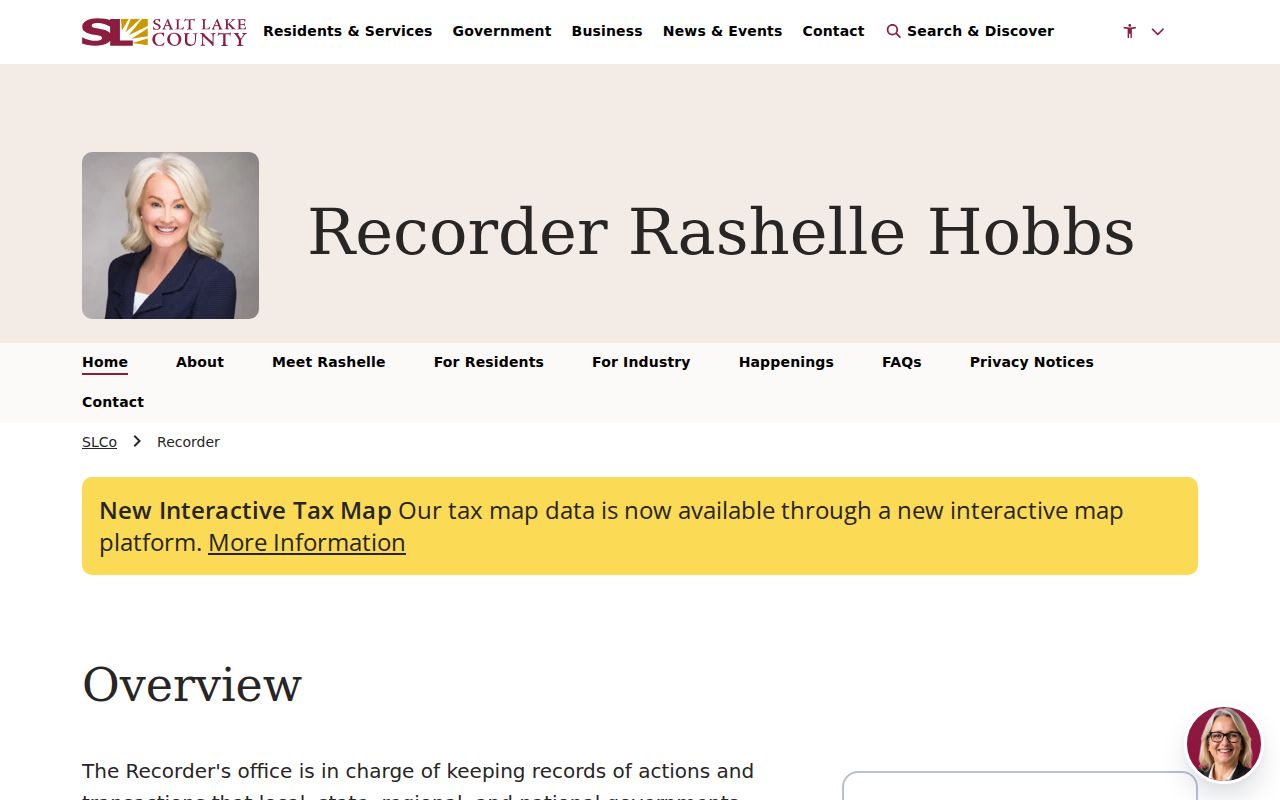
The Salt Lake County Recorder office page identifies the custodian behind the current deed trail for a Draper parcel.
Start at the Latest Purchase Deed
The Salt Lake County Recorder’s free Public Search asks the user to agree to terms and select an address or parcel from autocomplete. Search the parcel, identify the latest purchase or warranty deed, and separate it from mortgages, releases, liens, plats, and easements. Record grantor, grantee, instrument type, recording date, entry number, book and page, consideration when shown, and legal description.
- Search the current parcel or address in the Recorder Public Search.
- Find the latest deed and copy the legal description and parties into the worksheet.
- Search the seller or grantor as a prior grantee using the same legal description.
- Repeat with each earlier transfer, checking parcel, plat, lot, and block.
- When the online chain ends, ask for the relevant handwritten ledger, abstract card, or Archives tax series.
Data Services advertises owner history, tract index, chain-of-title, subdivisions, plats, and recorded-image options. The service lists a $5 temporary login for 24 hours. Current prices and access may change.
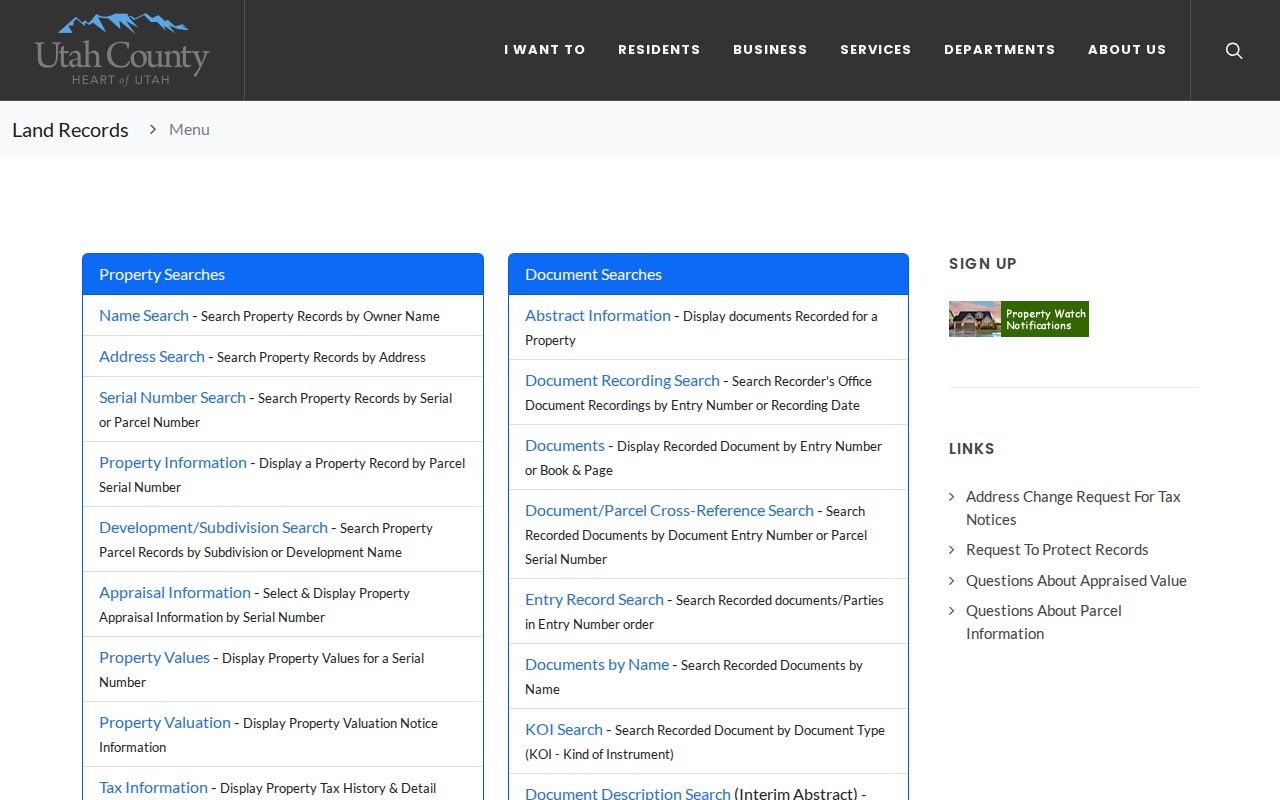
The Utah County land-record index is the alternate county route when a Draper parcel lies across the Traverse Ridge line.
Bridge the Pre-1981 Ledger Gap
A 2006 Salt Lake County audit reported mainframe recorded-document indexes from 1981 forward and handwritten ledgers before 1981. The current Recorder search does not state a cutoff, and a historic property digitization project is in progress. Ask which Draper books have been indexed now. If a record is not online, name the series, approximate year, parcel, legal description, grantor, or grantee instead of requesting “all deeds.”
County Archives provides the long fallback. Assessment rolls cover 1853 to 1949. Tax ledgers cover 1950 to 2010. Early descriptions use surname or ward arrangements; from 1893 legal descriptions are arranged by plat and block; later ledgers use year and serial or SIDWELL. The arrangement itself determines how a former owner can be found.
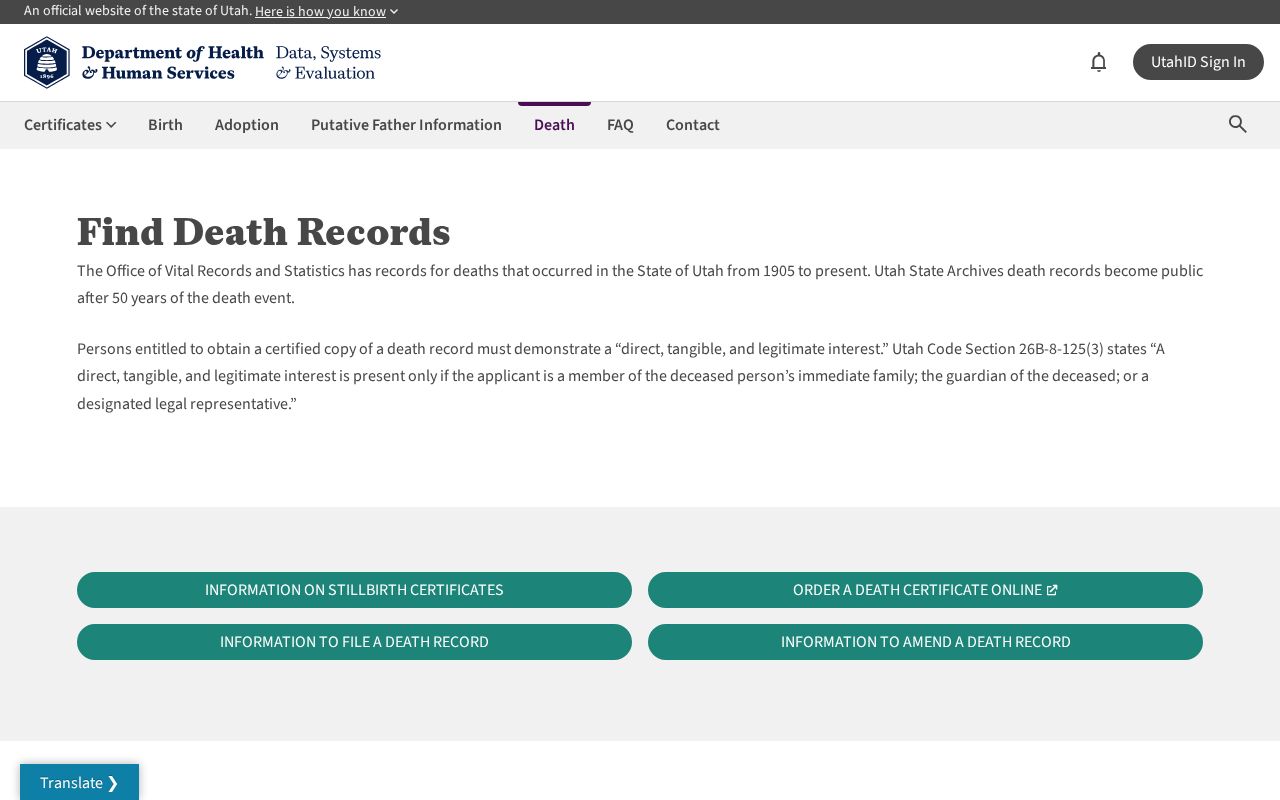
The Utah death-record route is one endpoint to pair with a property history when a past resident is deceased.
Tax Cards Reveal Old Serials
Salt Lake County property-history cards can show an address, owner name, owner mailing address, old serial number used through 1983, year-built or age note, appraisal date, and remarks for additions or changes. Obsolete cards may be crossed out. These details can match a house when a present street number differs from the historic record.
A tax card records assessment history, not every person who lived in a building. Use it to connect the parcel to the Recorder, directory, census, and newspaper trail. Keep the serial, legal description, source title, and card date in the record log.
Match Polk Runs to Census Years
The University of Utah’s digitized collection identifies Salt Lake City suburban titles that include Draper in 1965, 1970-71, 1971, 1974, 1977-78, 1979, and 1980. Related 1957-59 and 1962-64 territory runs also need page inspection. Use the scan’s name and street sections, and do not treat a suburban title as complete coverage of every Draper road.
- Write the printed address, name, page, section, and publication year.
- Check the nearest prior and later directory, testing initials and spelling variants.
- Compare the closest census year for household members and relationships.
- Use a deed, tax card, or legal description when the address changes.
- Use newspapers, probate, cemetery, or an eligible vital record to close the gap.
The directory may be compiled before its cover year, while the census records an enumeration point. Differences need a date note, not an automatic correction.
Search Draperville and Willow Creek
Draper settlement records begin around South Willow Creek in 1849 or 1850. Draperville became the post-office name in 1854. Census references through 1930 can use Willow Creek, Draperville, or Draper precinct. Search all of those labels when a modern city query returns nothing.
The naming bridge is especially useful for family history. A newspaper or census page may preserve a place word that never appears in a later city directory. Record the label exactly, then compare the historical parcel or neighborhood context before assigning it to present-day Draper.
House-History Help in Draper
The Draper Historical Society Research Library and Museum at 1054 Pioneer Road holds local books, documents, photographs, artifacts, and personal stories. Scheduled visits are listed Monday and Wednesday, 9 a.m. to 4 p.m., at 801-495-3476. Bring the address, old serial, legal description, suspected surname, and date range. Ask whether an item is original, transcribed, restricted, or cleared for copying.
The County Library genealogy page supplies Utah Digital Newspapers, Utah NewsSearch, Chronicling America, and on-site Ancestry Library. Search surname, street, Draper, Draperville, Willow Creek, and obituary terms. Newspapers can provide relatives and former addresses that a title record does not.
Building Clues From Sanborn Maps
The Library of Congress guide explains how to search Sanborn fire-insurance maps. Research identified Salt Lake City volumes from 1884 to 1950 but did not confirm exact Draper sheets. A map may show building footprint, use, and street context. It cannot name a former occupant. Keep an unconfirmed map gap visible and ask the Society or Archives for local material.
Past Households and Trail Endpoints
A previous resident trail often ends across several sources. A directory can list an occupant. A newspaper or obituary can name family. Probate can identify an heir. A cemetery can provide burial or plot research. A vital record can confirm an eligible event copy. Use the sources in sequence, and label each statement as an occupant clue, ownership event, family relationship, or burial record.
Lawful house history. Use past resident records for family history, estate research, and care for a property’s history. Do not use an address trail to stalk, harass, intimidate, or harm anyone.
The best conclusion is often modest: “listed at this address in a named directory,” “recorded as a grantor,” or “identified in a newspaper notice.” That wording keeps a previous residents search accurate.
Address Renumbering Needs Proof
The official sources inspected did not provide a complete dated Draper street-renumbering list. When a number fails, test old and new street names, directions, postal labels, precinct, plat, lot, block, and legal description. Ask Draper Mapping/GIS or the appropriate county map office for a dated addressing or annexation record. Do not invent a conversion year.