
Draper City Directory Collections
The University of Utah’s Utah City Directories collection holds 232 digitized items from publishers such as R.L. Polk & Co., George Q. Cannon & Sons, Crofutt, E.L. Sloan, and others. Its suburban titles are the most direct route for Draper. The table separates named runs from broader territory titles because a title alone does not prove that every Draper street was printed.
| Collection | Years or run | Where held | Access |
|---|---|---|---|
| R.L. Polk Salt Lake City Suburban | 1965, 1970-71, 1971, 1974, 1977-78, 1979, 1980 titles identified | University of Utah digital collections | Free scans, inspect Draper pages |
| Suburban territory titles | 1957-59 and 1962-64 related runs | University of Utah digital collections | Browse scans, verify territory |
| Draper local histories | 1849-1924 and 1849-1977 histories listed | Draper Historical Society | Scheduled research visit |
| Newspaper and obituary sources | Collection-specific | County Library and Utah Digital Newspapers | Free search; coverage varies |
The sample 1977-78 item was created by R.L. Polk & Co., contributed by the Utah State Historical Society, and arranged for residents, streets, businesses, organizations, and institutions. Its two-year label is a publication span, not a promise about one exact day.
Where Draper Directory Scans Live
Use the collection search first, then open the individual item and inspect its scan. Search by publisher, printed year, Draper, and suburban wording. The catalog describes a volume’s arrangement, but it does not expose every Draper page in static text. Record the item title, printed date, page number, section heading, and scan URL as you work.
The University of Utah directory collection is the main free digital shelf for Draper’s suburban directory research.
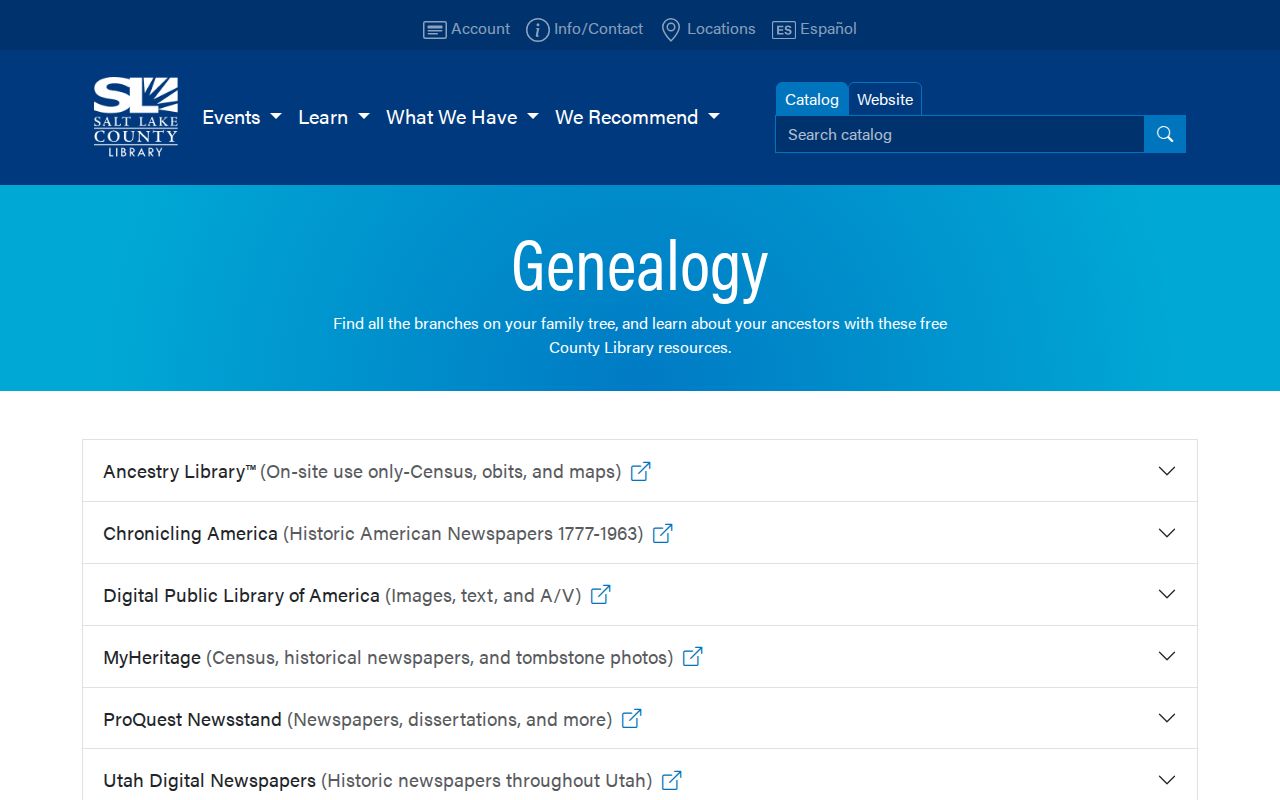
The Salt Lake County Library genealogy page adds newspapers, Utah Digital Newspapers, Chronicling America, DPLA, MyHeritage, ProQuest Newsstand, and Utah Records. Ancestry Library is available on-site and includes census, obituaries, maps, draft, Social Security, and lineage sources. These tools often supply the family link that a short directory entry lacks.
Name Section Versus Street Section
Polk directories often have more than one path into the same household. The alphabetical section answers “where was this name listed?” The street or geographic section answers “who was listed at this number?” A business, organization, and institutional section may sit beside those parts. When an address is known but a name is not, scan nearby numbers in the street section, then test each name in the alphabetical section.
Keep the source’s own spelling. Search initials, surname variants, spouse or relative notation, and both Draper and Draperville. A suburb edition can omit a household, repeat a name, use an abbreviation, or cover only a selected territory. Those are properties of the record, not proof that a person was absent from the town.
The 1977-78 Polk suburban directory record describes the alphabetic, geographic, business, and institutional arrangement.
Reading a Draper City Directory Entry
A directory entry is a dated listing, not a current identity certificate. Start by writing the exact page heading and printed year. Then inventory only what the scan shows.
- Name
- Record the printed spelling, initials, and any household or spouse notation.
- Address
- Copy the number, direction, street name, unit, and any street-section heading.
- Occupation or business
- Note the line when printed, but do not assume it proves a current role.
- Owner, renter, or widow mark
- Use an abbreviation only when the volume supplies or visibly uses that key.
- Source page
- Keep the item title, scan link, page number, and section so another researcher can retrace it.
The 1977-78 catalog describes residents, streets, businesses, organizations, institutions, and advertisements. It does not provide a named Draper sample entry in its text view, so a careful reader must inspect the scan before claiming a particular field. A city directory can suggest an address and date. Census, deed, newspaper, or vital records should do the confirming work.
Directory Terms Worth Knowing
Old pages use short labels that can make a search seem more certain than it is. These definitions keep the result in proportion.
- Criss-cross directory
- A reverse form that lets an address lead to a listed name, often through a street section.
- Householder index
- A name-based list tied to a household or address; the exact fields depend on the publication.
- Abbreviation key
- The volume’s explanation of short marks for household status, ownership, or related notes.
- Compilation date
- The period when information was gathered or printed, which may differ from the year on the cover.
Do not expand an abbreviation from memory. Read the key in that volume. If no key is visible, quote the mark as printed and describe it as unresolved.
Pair Draper Directories With Census Years
Directories fill gaps between federal census snapshots, but the two sources measure different moments. The census provides household members and relationships at enumeration. A directory supplies a name and address from its compilation process. The federal census is released under a 72-year rule, and historical precinct labels may read Willow Creek, Draperville, or Draper instead of the present city name.
- Choose a directory entry and write its page, address, household notation, and printed year.
- Search the nearest available prior and later volume, testing name and street paths.
- Use the census year to compare household size, relationships, ages, and occupations.
- Use the legal description, deed index, or tax card when a street number changes.
- Close the gap with a newspaper, obituary, probate index, cemetery record, or eligible vital copy.
Keep the directory and census dates side by side. A difference is not an error by itself.
Search Draper’s Older Place Names
Draper grew from the South Willow Creek settlement around 1849 or 1850. Draperville became the post-office name in 1854, and early census references use Willow Creek, Draperville, and Draper precinct labels through 1930. A modern “Draper City” search can miss a household indexed under one of those earlier terms.
Test place label, surname, street, spouse or maiden name, and nearby precinct wording. The City’s history and local books help bridge the period before a suburban city directory becomes useful. Do not force a present boundary onto a historical page. Note the record maker’s own geography.
Draper Historical Society’s Shelf
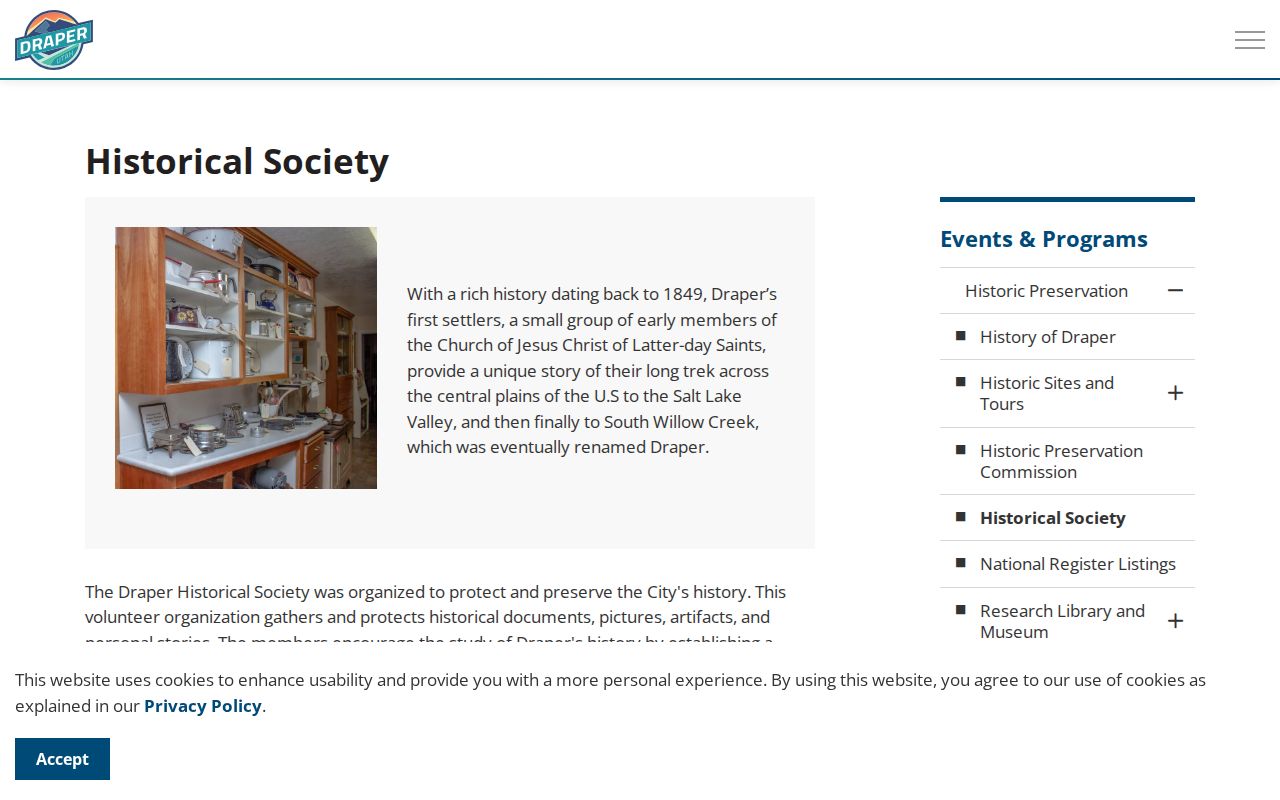
The Draper Historical Society Research Library and Museum is at 1054 Pioneer Road, Draper, Utah 84020. Scheduled visits are listed Monday and Wednesday, 9 a.m. to 4 p.m., with phone 801-495-3476. Holdings include documents, photographs, artifacts, personal stories, and local histories such as People of Draper: 1849 to 1924 and Sivogah to Draper City: 1849 to 1977.
Bring the old address, surname variants, date range, and any parcel or legal description. Ask staff to separate an original item from a transcription, and ask whether a copy can be made or published. The Society is especially helpful where printed directories are sparse or a mural, school, farm, or community event supplies a name clue.
The Draper Historical Society page gives the local museum and research-library route for historical directory work.
Tax Cards Put an Address Back
Salt Lake County Archives property-history cards can carry an owner name, owner mailing address, old serial number used through 1983, year-built or age note, appraisal date, and remarks for additions or changes. Tax assessment rolls cover 1853 to 1949, and tax ledgers cover 1950 to 2010. From 1893, legal descriptions are arranged by plat and block; later ledgers favor year and serial or SIDWELL.
These records do not create a directory of occupants. They help connect a historical street address to a parcel, owner, structure change, or legal description. Use the tax card with the directory and deed trail, especially when a printed address no longer matches the modern one.
Sanborn Maps Show the Setting
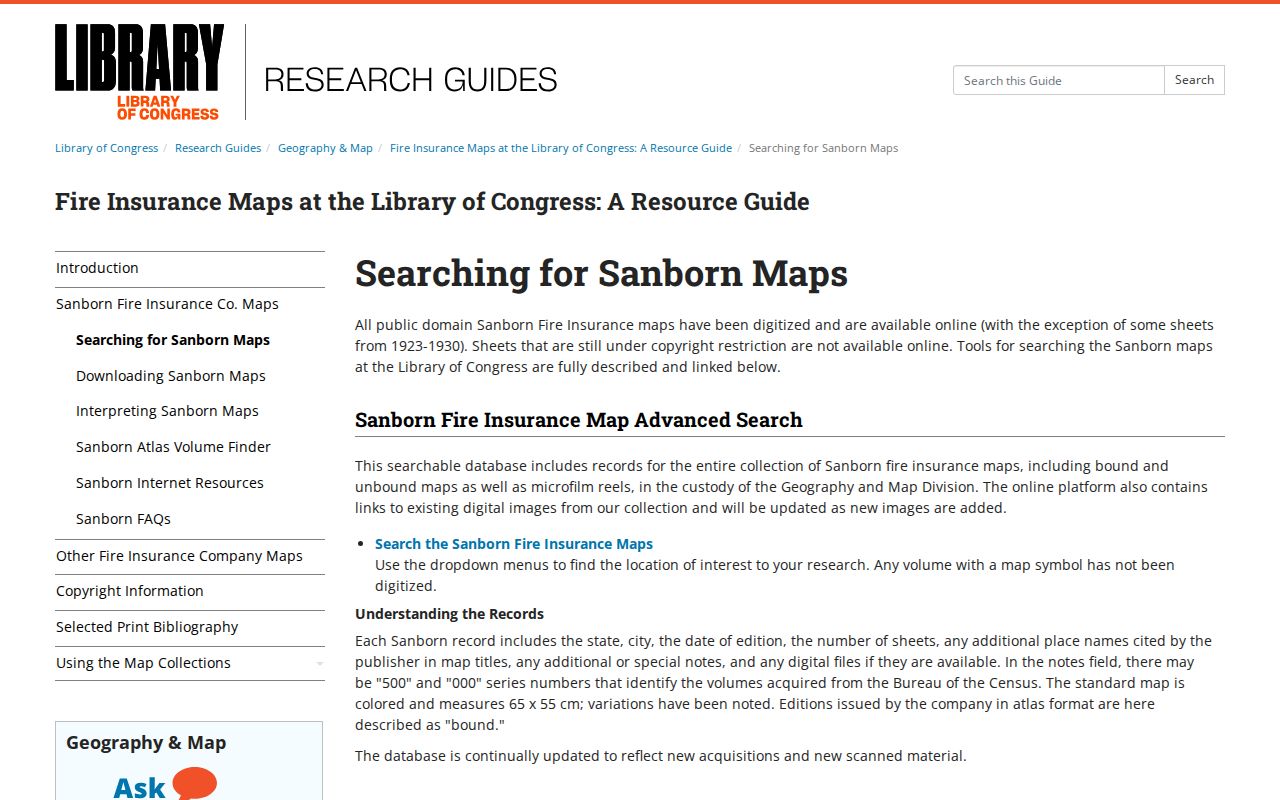
The Library of Congress Sanborn guide explains how to search fire-insurance maps. The inspected research did not confirm exact Draper sheets; Salt Lake City volumes from 1884 to 1950 are identified. A Sanborn map can add building footprint, use, and street context. It is not a resident list and cannot prove who occupied a structure.
Use it as a setting check after the directory and tax card identify a place. Preserve the map title and sheet. If the search is silent, keep that as a gap and ask the Historical Society or Archives rather than inventing a map coverage claim.